
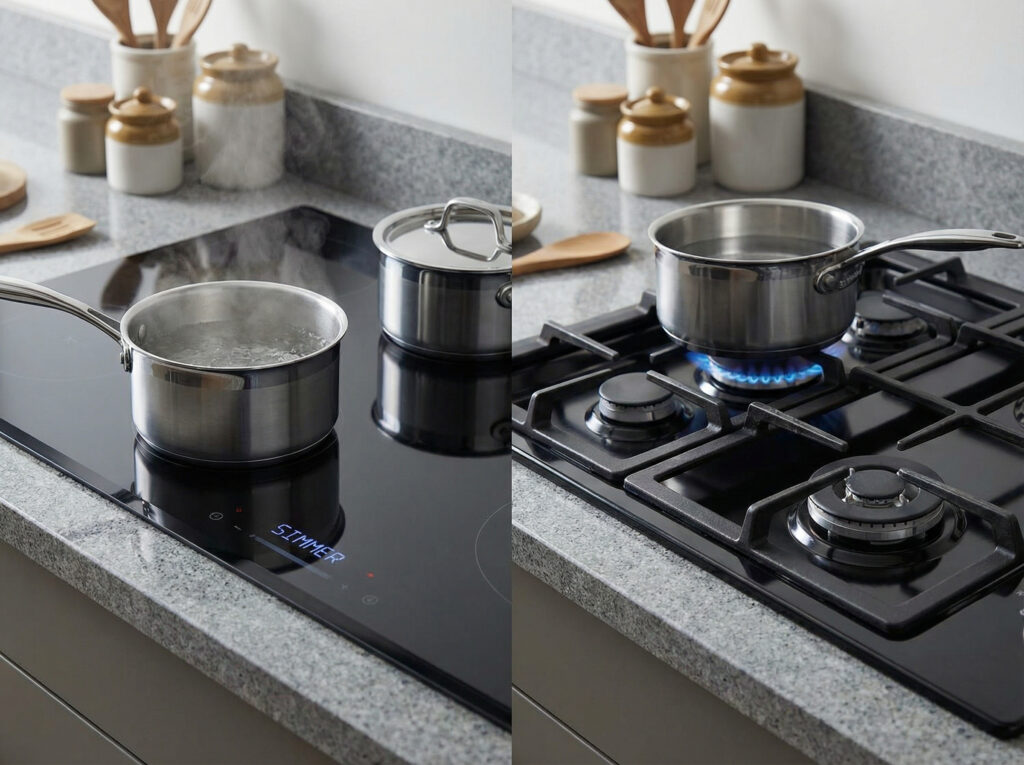
Induction and gas stoves both work well—but for different people. The right choice depends on your cooking style, safety needs, cookware, and whether power cuts are common. Here’s a clear comparison.
1) Cooking speed and performance
Induction
- Heats fast
- Great for boiling, frying, quick cooking
- Stable heat control
Gas
- Works for every cooking style
- Better for traditional cooking (direct flame)
- Preferred for heavy daily cooking
Induction wins for speed. Gas wins for flexibility.
2) Running cost and setup
Induction
- Runs on electricity
- No cylinder dependency
Gas
- Cylinder/pipeline dependent
- Needs regulator/piping setup
Which is cheaper depends on your local electricity rate and how much you cook daily.
3) Cookware compatibility
Induction
- Needs induction-compatible cookware (magnetic base)
- Some vessels won’t work
Gas
- Works with any cookware
Gas is easier if you don’t want to change utensils.
4) Safety
Induction
- No open flame
- Safer for homes with kids and elders
- Many models have auto cut-off
Gas
- Open flame risk
- Leak risk if not handled properly
Induction is safer overall.
5) Cleaning and maintenance
Induction
- Flat surface, easy cleaning
- Less oil and stain build-up
Gas
- Burners and supports need regular cleaning
- More oil stains over time
Induction is easier to maintain.
6) Power cuts and reliability
Induction
- Stops during power cuts
Gas
- Works even without electricity
Gas is better if power cuts are frequent.
Best choice based on your situation
Choose induction if:
- You want safety and easy cleaning
- You cook light-to-medium daily
- You don’t want cylinder dependency
Choose gas if:
- You cook heavy daily
- You want full cookware freedom
- Power cuts happen often
Many homes keep both: gas for main cooking + induction for quick backup (or vice versa).
If you want the best long-term value, decide based on your daily routine, not what others buy.