
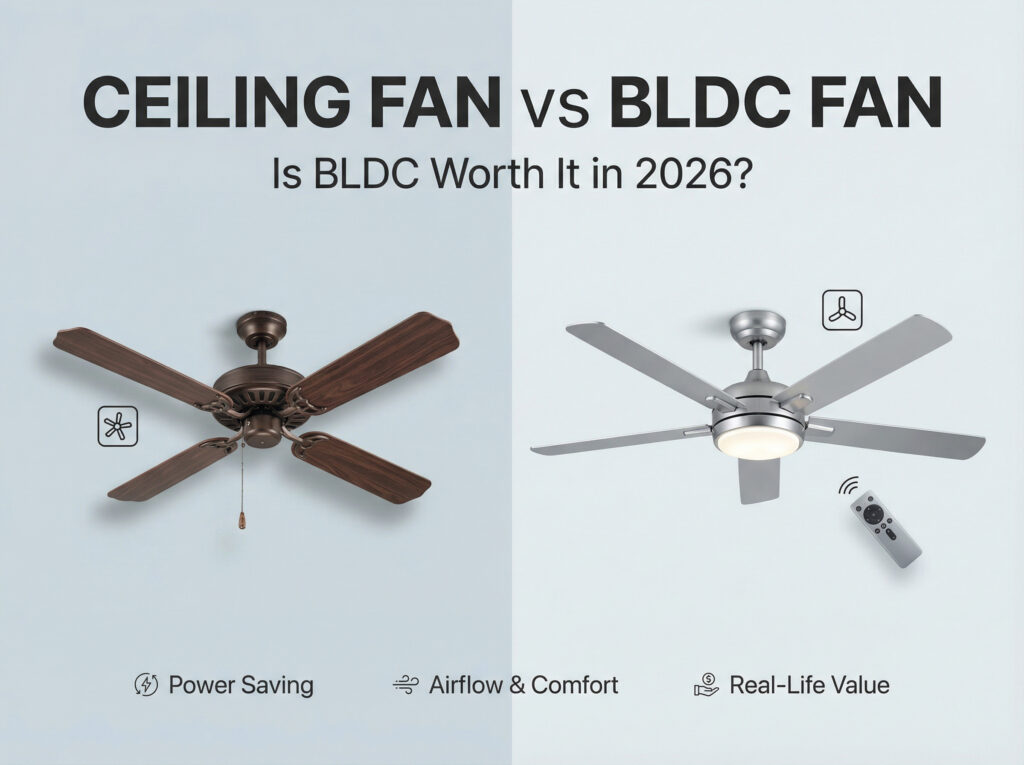
In 2026, BLDC fans are everywhere — lower power use, remote control, and “smart” features. But a lot of people still feel disappointed after buying one, not because BLDC is bad, but because they expected big savings without matching it to their real usage.
A simple truth: BLDC is worth it only when your usage makes it worth it. This guide helps you decide clearly — without hype.
1) What is a BLDC fan (simple explanation)?
A normal ceiling fan uses a conventional motor. A BLDC fan uses a more efficient motor design that usually consumes less electricity for similar airflow.
The main promise: lower power consumption + smoother speed control.
2) When BLDC is actually worth it
BLDC makes the most sense if:
- You run fans many hours daily (especially at night)
- You have multiple fans running at the same time
- You want remote control, timer, and smoother speed steps
- You prefer lower noise and steady performance
A very common reason people regret BLDC is simple: they don’t run fans long enough to feel meaningful savings.
3) The biggest mistake: buying based on “watts” only
Many buyers compare watt numbers and forget the real comfort factor: airflow.
A fan can be “low power” and still feel weak if airflow isn’t strong enough for your room.
A common complaint we hear from buyers is: “Remote is nice, but airflow feels less.”
That usually happens when people choose based on power saving first, not air delivery and blade design.
4) What to check before buying (this is the real checklist)
Before you choose BLDC or a normal fan, check these practical things:
- Air delivery / airflow performance (not only watts)
- Blade size and design (affects throw and comfort)
- Low-speed comfort (important for sleeping)
- Speed steps (smooth control is a big BLDC advantage)
- Warranty coverage for motor + remote/receiver (for BLDC)
- Spare availability + service support (remote/PCB parts matter)
This is what separates a “good on paper” fan from a fan that feels good daily.
5) Voltage fluctuation: the hidden factor people ignore
In many homes, the real issue isn’t fan type — it’s voltage fluctuation, which can slowly damage electronics over time.
If your area has frequent voltage swings:
- choose models with better protection
- and buy from sources where support and spares are dependable
This matters more for BLDC because it has more electronics involved.
6) BLDC features in 2026: useful vs useless
Actually useful features:
- Remote control
- Timer
- Sleep mode
- Memory function (remembers last speed after power cut)
- Smooth speed steps
Usually unnecessary for most people:
- App control for basic fan use
- Too many “modes” you never touch after week one
Quick note before buying (trust check)
Savings depend on usage hours and electricity rates. If your fan runs only a short time daily, the savings difference can feel small. Also, always check warranty and service support before choosing — especially for BLDC electronics.
Quick decision rule
Choose BLDC if you run fans long hours daily or use multiple fans — you’ll benefit most from efficiency + remote convenience.
Choose a good normal fan if your usage is light and you want lower upfront cost with simpler maintenance.
In 2026, BLDC isn’t “mandatory.” It’s a smart upgrade only when it matches your routine.
Written by: Wayanad Metals Team
We help customers compare everyday home and kitchen appliances based on usage, budget, and maintenance needs. For quick guidance, message us on WhatsApp.